ATS Revolution—Where Strategy Meets Opportunity
Letʼs be real, job hunting today feels like sending your resume into a black hole. You hit "Apply," cross your fingers and hear nothing. Sound familiar? Thatʼs not your fault. Itʼs the Applicant Tracking System (ATS) the silent filter between you and your next big break.
Hereʼs the truth: If your resume isnʼt ATS-friendly, itʼs not getting seen. But hereʼs the good news, you can beat the system, with a few smart moves.
Frustrated with word templates that never seem to work? Try building a resume the ATS actually loves without spending hours formatting it.
💡3 Key Takeaway
- 75% of resumes get rejected before a recruiter even sees them. It's not you, itʼs youʼre formatting.
- ATS tools scan your resume for keywords, structure, and relevance.
- A clean, tailored, keyword-rich resume is your ticket to making it past the digital gatekeeper
What An ATS-Friendly Resume Actually Looks Like
Think of an ATS (Applicant Tracking System) as a robot recruiter. It scans your resume and decides if youʼre a match even before a human gets a glance.
So, yeah, your resume might be getting ghosted by a robot.
Hereʼs how it works: the ATS checks for keywords, formatting, and structure that match the job description. If somethingʼs off say, wrong format or missing phrases, itʼll auto-reject your resume. Ouch, right? You've got the skills, but if your resume isnʼt ATS-optimized, it might never make it past the machine.
This is exactly why we built our online CV Builder to help real people (like you!) create Resumes that pass ATS filters with ease.
A Quick Flashback: How Resume Screening Went Digital
Back in the late ‘90s, recruiters were drowning in printed resumes and overflowing inboxes. Then came the solution: ATS software, designed to organize, sort, and scan applications.
Fast forward to today:
✔ 98% of Fortune 500 companies uses ATS
✔ Even small businesses and startups rely on them
✔ Youʼre more likely to talk to an algorithm than a person in the first round
The volume of job applications today is crazy. Thatʼs why hiring teams lean on automation and why your resume needs to speak ATS fluently.
How ATS Reads And Scores Resumes
Hereʼs what really happens when you hit “submitˮ:
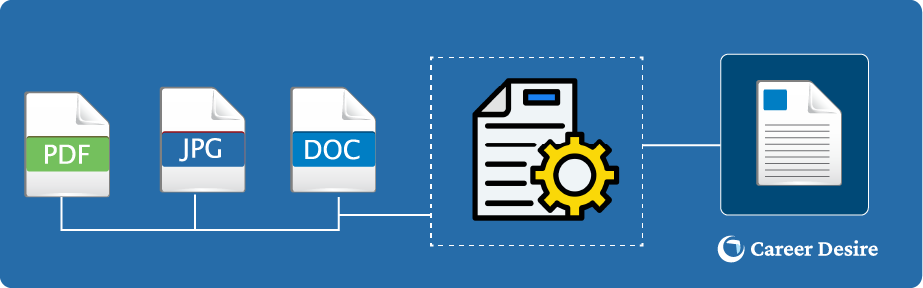
• Your resume gets parsed (split into data chunks like name, job title, skills).
• The system compares your content with the job description.
• It looks for exact keywords, context, and structure.
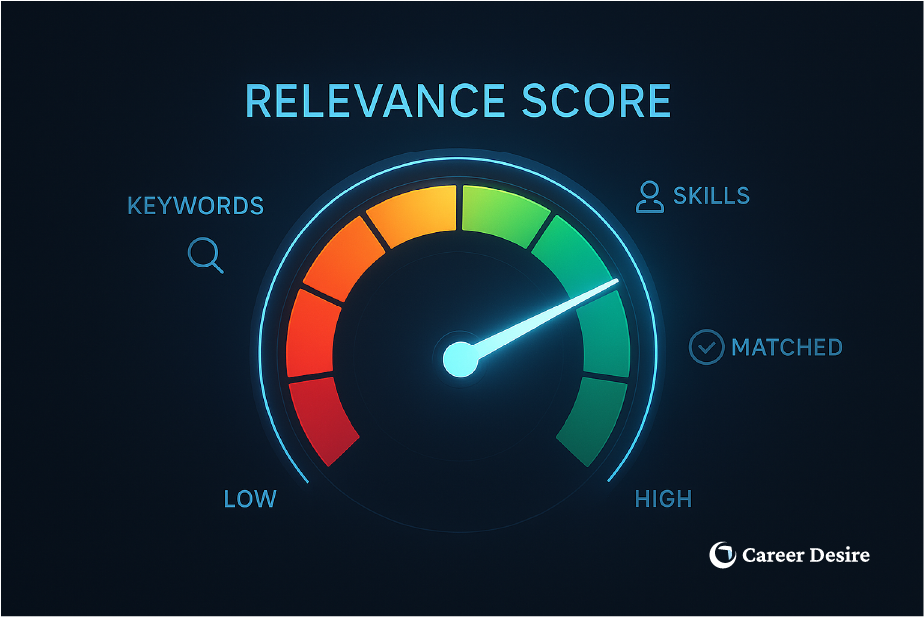
• Then comes the “match scoreˮ a percentage showing how “fitˮ your resume is.
This score determines whether your resume shows up at the top or vanishes into the “maybe laterˮ pile.
And hereʼs the kicker:
Even if you're qualified, missing just one keyword or using the wrong file format can knock you out of the race.
The Harsh Reality: Why Most Resumes Get Rejected
Letʼs face it, rejection stings. But hereʼs the thing: most resumes arenʼt rejected because of a lack of talent. Theyʼre rejected because theyʼre unreadable by ATS.
Recent studies show that up to 75% of resumes never reach a human. Why? Because:
• They donʼt include the right keywords
• The formatting confuses the system
• Fancy templates break the scanning logic
That beautiful resume you spent hours on in Word? If itʼs filled with tables, text boxes, or stylish fonts it might look great to you, but itʼs gibberish to the ATS.
Frustrated? Youʼre not alone. Most job-seekers donʼt realize theyʼre being screened out before they even get a shot. But once you know how the system works, you can flip the script.
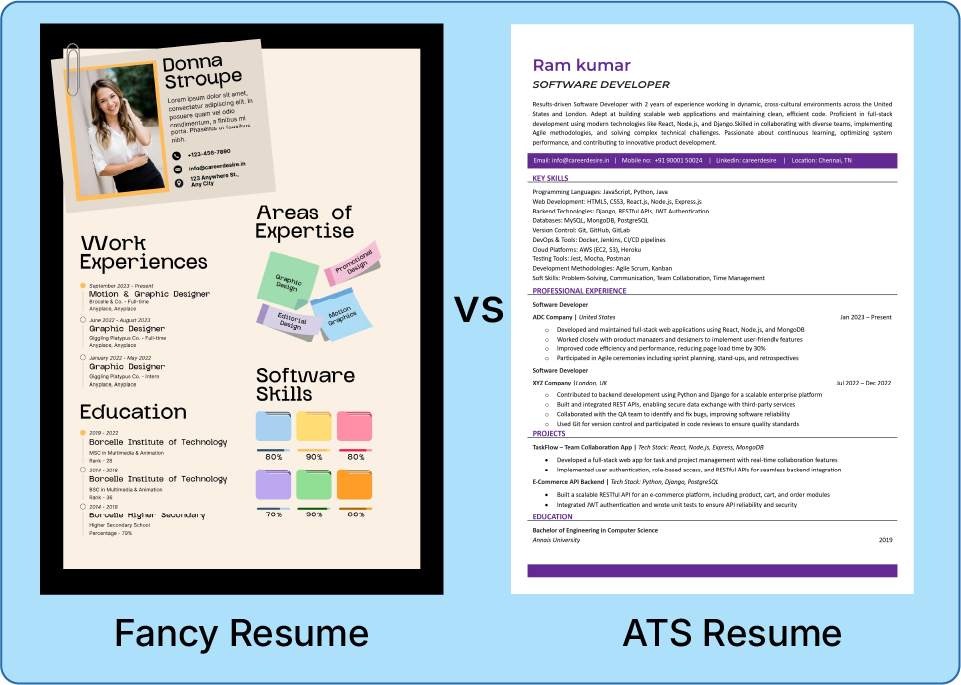
What An ATS-Friendly Resume Actually Looks Like
You donʼt need to be a tech expert to beat the bots. You just need to follow a few smart resume rules:
✔ Use job-specific keywords—that reflect the exact skills, tools, and qualifications mentioned in the job posting
✔ Stick to simple formatting—no columns, no tables, no fancy visuals
✔ Use standard headings—like “Experienceˮ or “Educationˮ (not “My Journeyˮ)
✔ Keep it clean—use readable fonts like Arial or Calibri
✔ Save as a .docx or .pdf (unless the job post says otherwise)
💡Pro Tips: Beat The Bots
- Start with a tailored, keyword-rich summary, donʼt use the same resume for every job
- Mirror the language of the job posting if they say “client coordination,ˮ donʼt write “customer engagementˮ
- Avoid headers, footers, and graphics, ATS canʼt “seeˮ them
- Include a LinkedIn link or portfolio URL—modern ATS software usually reads these links and they can help recruiters review your profile
- Customize each time—yes, it takes effort. But it also gets interviews.
If youʼre serious about standing out, hereʼs how to go beyond the basics:
Want Your Resume To Hit All These Checkpoints Automatically?

Conclusion: Ready To See If Your Resume Makes The Cut?
The way resumes are screened today has shifted entirely, what looks good to you might be invisible to an ATS. From understanding how these systems work to optimizing your resume with the right structure and keywords, every step matters.
If your resume isnʼt built for ATS, itʼs built to be ignored. Donʼt let a formatting issue stand between you and your next job.
Letʼs change that.
Your next opportunity could be one smart Resume away.